

What is propane gas and how is it extracted?
Propane gas is a widely used fuel in various applications, yet many are still unfamiliar with what it exactly is and how it is produced. Propane gas is a hydrocarbon gas (C3H8) derived from natural gas processing and crude oil refining. It is obtained by separating and processing raw natural gas and crude oil, during which propane is separated, purified, and stored as a liquid.
What is propane gas?
Propane gas is a hydrocarbon gas consisting of three carbon atoms and eight hydrogen atoms (C3H8). It is a byproduct of natural gas processing and petroleum refining. It is colorless, odorless, and is often mixed with an odorant to detect any leaks. Propane gas is stored as a liquid under pressure and evaporates when released for use.
How is propane gas extracted?
Propane gas is extracted from natural gas and crude oil. The process begins with the extraction of raw natural gas and crude oil from the ground. These raw materials are then separated and processed in a refinery. Here, various components such as propane, butane, and ethane are separated. The propane gas is then purified, compressed, and stored as a liquid in pressure tanks.
Practical applications of propane gas?
Propane gas is used in a wide range of applications, such as: Heating of residential and commercial properties Cooking on propane gas stoves Providing hot water Powering vehicles and machinery Industrial processes such as metalworking and drying crops
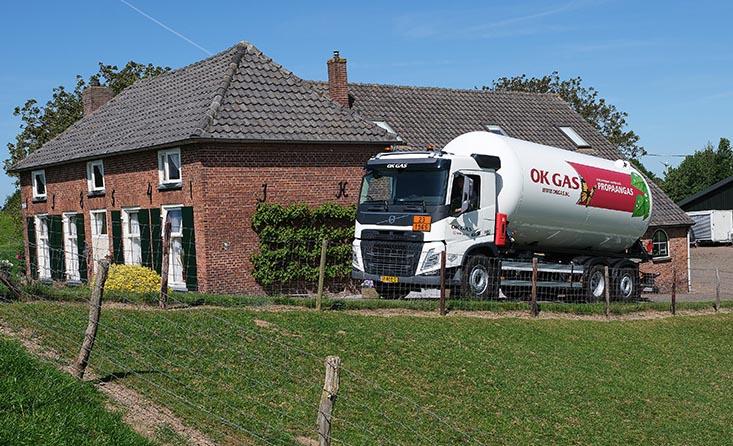
At OK GAS, we understand that every situation is unique, and we are happy to advise you on the best propane gas solutions for your specific needs. Please contact us for personalized advice and discover how we can help you make the most of propane gas.